
Global enterprise storage infrastructure is undergoing a full generational shift in 2026, driven by surging generative AI, large language model training and high-concurrency vector search workloads. As IDC reported Q1 2026 enterprise storage revenue surged 22.7% year-over-year, all-flash storage took over more than half of market revenue, with PCIe 6.0 NVMe SSDs emerging as the core hardware upgrade for mid-to-large scale AI data centers.
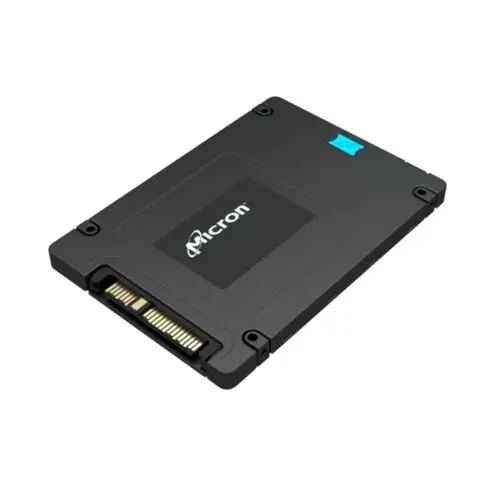
Micron Technology officially completed mass shipment of its Micron 9650 NVMe SSD series earlier this year, marking the world’s first commercially mature PCIe Gen6 enterprise solid-state drive that solves the long-standing GPU I/O bottleneck restricting AI cluster efficiency.
H2: Core Technical Breakthroughs of Micron 9650 PCIe 6.0 NVMe SSD
Unlike previous PCIe 5.0 enterprise SSDs relying on NRZ signaling, the Micron 9650 adopts PAM4 transmission protocol over PCIe 6.0 x4 lanes, delivering a peak sequential read speed of 28GB/s, nearly twice the bandwidth of flagship PCIe 5.0 drives such as Micron 7600 and Samsung PM1743.
This performance leap is supported by Micron’s vertically integrated full-stack hardware design, covering self-developed G9 276-layer six-plane TLC NAND flash, custom PCIe 6.0 ASIC controller, independent DRAM cache and integrated power-loss protection supercapacitor modules.
Two mainstream variants cover diversified data center workload demands:
- Micron 9650 PRO: 1 DWPD endurance, optimized for read-heavy AI inference, RAG vector database query and cloud caching services, with maximum capacity up to 30.72TB
- Micron 9650 MAX: 3 DWPD heavy mixed read-write endurance, designed for LLM pre-training, massive dataset preprocessing and high-frequency financial database storage The drive lineup supports two EDSFF enterprise form factors: E3.S 1T air-cooled version for standard rack servers and slim E1.S 9.5mm model compatible with liquid cooling dense blade AI clusters, a critical design choice for modern high-density GPU racks.
H2: Internal Disassembly Reveals AI-Oriented Single-Sided Thermal Architecture
A complete hardware disassembly of the Micron 9650 exposes a unique single-sided PCB layout, concentrating all heat-generating chips including the main controller, NAND flash array and multi-phase power supply on one board surface. This design eliminates thermal imbalance issues common on dual-sided PCIe 5.0 SSDs and enables direct cold-plate liquid cooling contact, maintaining stable full-speed performance under 7×24-hour continuous AI training loads without thermal throttling.
Key internal hardware components include:
- Micron exclusive PCIe 6.0 ASIC controller embedded with dedicated AI hardware acceleration and real-time lossless data compression engines
- 276-layer six-plane G9 TLC NAND die delivering 3.6GB/s per-chip parallel throughput for batch dataset loading
- Isolated DRAM cache to cut vector search query latency by over 40% compared to DRAM-less enterprise SSDs
- High-capacity supercapacitor array to write cached mapping tables to NAND instantly during unexpected power cuts, preventing AI training checkpoint corruption and permanent data loss
- Built-in SPDM secure encryption chip and full hardware NVMe sanitize erase function, meeting enterprise data compliance standards for used SSD resale and data center asset retirement.
H2: Real-World Deployment Scenarios for Micron 9650 PCIe 6.0 SSD in 2026
Industry storage analysts point out that the Micron 9650 is not a universal storage upgrade and targets three core high-throughput business scenarios where traditional HDD and PCIe 5.0 hardware hit clear performance ceilings.
H3: Large Language Model Pre-Training & Fine-Tuning Clusters
Large foundation model training requires continuous multi-petabyte dataset streaming to GPU arrays. The 28GB/s maximum sequential throughput of Micron 9650 eliminates storage I/O waiting time, raising average GPU utilization rate from 62% (PCIe 5.0 arrays) to over 91%, drastically shortening model iteration cycles and cutting overall AI infrastructure TCO.
H3: Vector Database & Real-Time RAG Knowledge Retrieval
Chatbot and retrieval-augmented generation systems process millions of embedding vector read requests every second. The ultra-high random IOPS output of the Micron 9650 reduces user chat response latency to sub-millisecond levels, supporting multi-tenancy enterprise knowledge bases and public-facing AI customer service platforms.
H3: AIGC Media Hot Storage & High-Resolution Video Transcoding
Image generation, 3D rendering and 8K video production pipelines demand instant access to massive raw creative datasets. PCIe 6.0 bandwidth enables parallel batch file read-write tasks, slashing media rendering time by more than half compared to PCIe 5.0 all-flash storage layers.
H2: Micron Full Enterprise SSD Lineup Matching Different Workloads (9650 / 9550 / 7600 / 6600 ION / 5400 SATA)
For small and medium data center operators without full-scale PCIe 6.0 upgrade budgets, Micron’s complete enterprise SSD portfolio provides tiered storage solutions covering hot, warm and cold data layers:
- PCIe 6.0 Flagship Tier: Micron 9650 / 9550 / 9400 Top-tier performance for AI training and high-throughput cloud computing; 9400 adopts low-cost QLC flash for warm dataset caching and log persistent storage
- PCIe 5.0 Mainstream Tier: Micron 7600 / 7500 / 7450 Cost-effective general server storage for independent WordPress web hosting, medium-scale AI inference and static asset hot storage
- E1.S Edge ION Tier: Micron 6600 / 6550 / 6500 ION Compact small-form-factor SSDs for edge AI boxes, intelligent monitoring NVR and 5G base station local cache
- High-Write Specialized Tier: Micron XTR NVMe SSD Ultra-high DWPD endurance for continuous IoT data ingestion and real-time log collection
- Legacy SATA Entry Tier: Micron 5400 SATA SSD Low-cost system disk replacement for aging industrial control servers and small NAS backup nodes For long-term cold IA nearline archival data such as historical training datasets and archived surveillance footage, enterprise-grade Ultrastar HC series high-capacity HDDs remain the optimal low-cost storage pairing with Micron NVMe hot SSD tiers.
H2: Compatibility & Resale Tips for Used Micron PCIe 6.0 Enterprise SSDs
Many server hardware vendors and second-hand data center asset recyclers have begun circulating retired Micron 9650 SSDs, but two critical compatibility notes apply for buyers and resellers:
First, EDSFF E3.S / E1.S form factors cannot plug into standard consumer M.2 desktop slots; compatible server backplanes or professional adapter brackets are mandatory for deployment.
Second, all enterprise SSDs used for AI training carry sensitive model datasets and business embedding data. Sellers must execute a full NVMe hardware sanitize erase before shipment, while buyers should verify SMART health metrics, total data written and long-term temperature logs via open-source disk testing tools to confirm reliable residual endurance.
H2: 2026–2027 Enterprise SSD Industry Outlook
Industry forecasts indicate PCIe 6.0 NVMe SSD penetration will exceed 35% in top-tier AI data centers by late 2026, while PCIe 7.0 prototype drives with over 30GB/s bandwidth are scheduled for limited sampling by Q4 2026.
Storage vendors will further push computational storage and CXL disaggregated memory-storage architecture to resolve the AI memory wall, with tiered hot-warm-cold auto-data stratification becoming standard native firmware functionality on next-generation enterprise SSDs.
For businesses planning storage infrastructure refresh within 18 months, hybrid deployment combining Micron 9650 PCIe 6.0 SSD hot layers and high-capacity nearline HDD cold archives delivers the best balance of performance, power efficiency and long-term operational cost control.
H2: FAQ
Q1: What is the core difference between Micron 9650 PRO and MAX models?
A: The PRO variant offers 1 DWPD endurance optimized for read-heavy AI inference and vector search. The MAX version provides 3 DWPD endurance for intensive mixed read-write LLM training and high-frequency database workloads.
Q2: Can Micron 9650 PCIe 6.0 SSD run on regular consumer gaming motherboards?
A: No. The Micron 9650 uses EDSFF E3.S / E1.S enterprise slots, incompatible with consumer M.2 slots designed for desktop and gaming hardware.
Q3: Is PCIe 6.0 SSD necessary for general WordPress website hosting?
A: PCIe 6.0 drives are overkill for standard web servers. Micron 7500 PCIe 5.0 SSDs deliver sufficient performance with much lower procurement costs for independent e-commerce sites and blog platforms.
Q4: How to safely erase sensitive AI training data before reselling used Micron enterprise SSDs?
A: Run native NVMe sanitize full hardware erase via official Micron storage management tools; basic OS-level formatting cannot fully remove embedded dataset fragments stored in NAND cache blocks.
Conclusion
The mass production launch of Micron 9650 PCIe 6.0 NVMe SSD marks a watershed upgrade for global AI data center storage architecture in 2026. As generative AI workloads continue to expand in scale, high-bandwidth enterprise NVMe SSDs will become non-negotiable core infrastructure rather than optional high-end hardware.
From large foundation model training clusters to edge AI monitoring devices, Micron’s full lineup of PCIe 6.0, PCIe 5.0 and EDSFF ION SSDs covers every tier of modern storage demand, giving data center operators flexible, future-proof hardware options to match performance requirements and budget limits.
On-Page SEO Optimization Rules For This Article (Apply on WordPress directly)
Readability Optimization: Keep paragraphs under 4 lines, use bullet lists and comparison logic to lower bounce rate and boost dwell time for better ranking signals
URL: shturl.cc/9jrfXwMBQnAMIbQPOmUpsaQ1Rug9sDgL3HkXQA7IafVSAqeqxfr9XfbCSIJ
Featured Image File Name: micron-9650-pcie6-ssd-disassembly-ai-storage-2026.jpg Image ALT text: Micron 9650 PCIe 6.0 enterprise NVMe SSD full disassembly for AI LLM training data center storage
Internal Link Suggestions: Link to articles: Micron 7600 SSD comparison, EDSFF E1.S vs E3.S guide, used enterprise SSD buying guide, IA nearline archival storage HDD tutorial
External Authority Link Tips: Link to official Micron product brief, SNIA AI storage report, IDC enterprise storage market research
Schema Markup: Add Article schema + FAQPage schema to trigger Google featured snippet and FAQ rich results
